2026 Best Personalized Boxes for Global Buyers?

Global buyers are no longer choosing packaging for appearance alone. They notice opening quality, material feel, shipping damage, and disposal effort. In 2026, personalized boxes will sit at the intersection of branding, logistics, sustainability, and customer trust.

The opportunity is substantial. Smithers’ “The Future of Global Packaging to 2029” describes continued growth across worldwide packaging demand, supported by e-commerce and premium product presentation. The 2024 DHL E-Commerce Trends Report also shows that delivery expectations and sustainability strongly influence online purchasing decisions. Buyers increasingly expect packaging to arrive attractive, protective, and responsibly designed.

That sounds simple. It is not.

A box may look impressive on a product page but fail during international transit. Thin inserts can shift. Glossy coatings may complicate recycling. Excessive dimensions can increase shipping costs and emissions. McKinsey’s global packaging research has repeatedly identified paper and cardboard as preferred sustainability options, yet material choice alone does not guarantee a better solution. Local recycling systems differ widely.

This guide examines the 2026 best personalized boxes for global buyers through practical criteria. These include structural strength, print consistency, minimum order quantities, customization flexibility, material transparency, and cross-border fulfillment. It also considers how packaging performs in real moments: a rigid box opening at a kitchen table, a folding carton surviving a humid warehouse, or a small parcel arriving with a crushed corner.

There is no universal winner. That is worth admitting.

The strongest choice depends on product weight, destination, budget, audience, and brand promise. Our comparisons therefore focus on evidence, supplier reliability, and realistic trade-offs, helping businesses choose personalized boxes that look distinctive without creating avoidable costs or waste.

2026 Best Personalized Boxes for Global Buyers?

What Personalized Boxes Are and Why Global Buyers Choose Them

2026 Best Personalized Boxes for Global Buyers

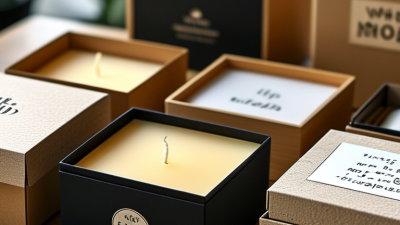
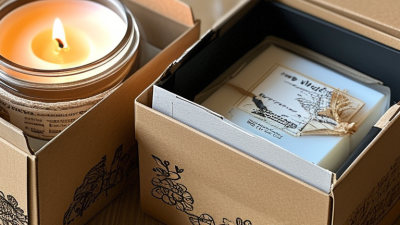
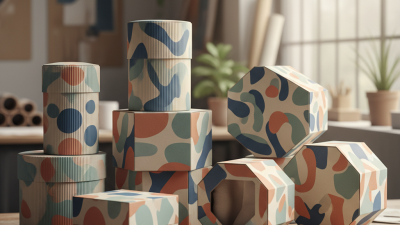
Personalized boxes are packaging designed around a product, audience, and delivery route. They may carry a name, message, regional language, color system, or precise internal insert. In practical sampling, fit matters more than decoration. A box that holds a ceramic cup needs different board strength from one holding folded clothing. Small details count.

Global buyers choose them because packaging can communicate identity before the product is opened. A localized greeting can feel considerate, while clear handling information supports smoother customer use. Custom dimensions may reduce empty space, shipping volume, and protective material, but savings require testing. Buyers should request a physical sample, compression checks, moisture review, and accurate print proofs. Ask about recycled content and documentation. Requirements differ across destinations.

Practical sourcing experience shows that reliable suppliers explain board grades, tolerances, lead times, and replacement procedures in writing. They should also confirm whether colors remain consistent across production batches. A visually impressive package can still arrive crushed. That weakness is easy to overlook. Personalization is not automatically better. Overdesigned boxes may increase cost, waste, or customer frustration. The strongest choice balances recognition, protection, local expectations, and honest performance evidence.

Key Features of the Best Personalized Boxes in 2026

2026 Best Personalized Boxes for Global Buyers?

The best personalized boxes in 2026 combine visual identity with measurable performance. Smithers reports that the global sustainable packaging market could grow from about $305 billion in 2023 to $424 billion by 2028. This signals a clear buyer expectation: custom packaging should reduce waste, not simply look attractive. Recyclable fiber, water-based inks, and right-sized structures are becoming practical requirements. Less empty space matters.

Personalization should also support international delivery. A strong box uses clear dimensions, reinforced corners, and moisture-resistant paper where needed. It should protect products through sorting, stacking, and long-distance handling. The International Safe Transit Association recommends performance testing for distribution hazards, including vibration, shock, and compression. A printed thank-you message is useful, but a crushed box is not. That part is easy to forget.

Flexible production is another key feature. Global buyers may need smaller batches, multilingual panels, variable names, QR-linked instructions, or seasonal artwork. Digital printing can support these changes with less setup waste than traditional methods. However, customization can increase material use and production errors. The best suppliers provide dielines, pre-production samples, and traceable quality checks. I would question any “eco” claim without clear fiber content and disposal guidance. Packaging decisions are rarely perfect. Real performance should outweigh decoration.

Materials, Designs, Sizes, and Customization Options

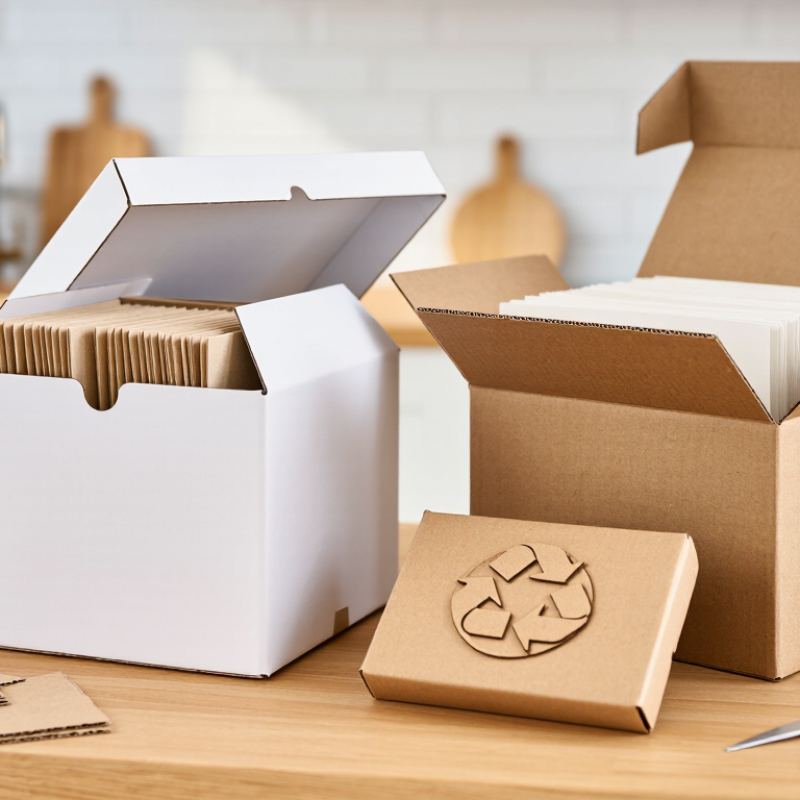
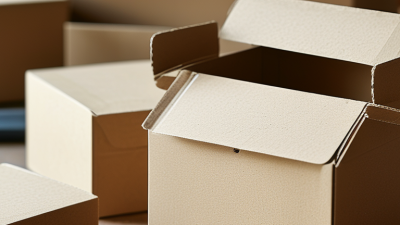
Personalized boxes for global buyers must balance appearance, protection, and shipping efficiency. Recycled corrugated board suits heavier products and long-distance delivery. Molded pulp works well for fragile items, especially when plastic inserts are unnecessary. Paper-based coatings can improve moisture resistance, but they may reduce recyclability. The compromise is real.

According to McKinsey’s 2023 global packaging survey, 60–70% of consumers are willing to pay more for sustainable packaging. However, material claims need evidence. Buyers should request recycled-content percentages, fiber certifications, and recycling guidance for each destination market. Smithers’ e-commerce packaging analysis also indicates annual market growth above 5% through 2028. This growth increases demand for lighter, more adaptable box formats.

Design should match the product, not only the customer’s logo. A compact mailer with a tear strip can improve unboxing and reduce packing time. Adjustable inserts protect different product shapes without creating excessive empty space. Common size options range from small 180 × 120 × 60 mm boxes to larger 400 × 300 × 150 mm formats. Customization may include one-color printing, inside messages, embossing, variable QR codes, and seasonal sleeves. Full-color finishing looks attractive, but it can raise cost and complicate recycling. A perfect box is rarely perfect. I have seen beautiful packaging fail because the lid loosened during humid delivery. Prototype testing, drop tests, and dimensional-weight checks should guide the final design.

2026 Best Personalized Boxes for Global Buyers

Typical box formats compared by calculated internal capacity. Dimensions are shown as length × width × height in centimeters.

Materials

Corrugated board suits shipping, kraft paperboard supports a natural look, and rigid paperboard provides a premium presentation.

Design Options

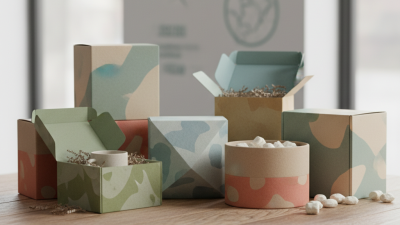
Common choices include tuck-end, mailer, sleeve, magnetic-close, and die-cut structures.

Customization

Personalization can include printed artwork, interior inserts, labels, handles, windows, coatings, and variable names or messages.

Capacity is calculated from length × width × height; 1,000 cubic centimeters equals approximately 1 liter.

How to Compare Suppliers, Prices, Quality, and Shipping

2026 Best Personalized Boxes for Global Buyers?

How to Compare Suppliers, Prices, Quality, and Shipping

Choosing personalized boxes for international sales requires more than checking a catalog price. I compare supplier experience, production capacity, material options, and communication speed. Ask for samples. Inspect the folds, print alignment, glue strength, and box odor. A sample that looks excellent may still fail after stacking. Request measurements in millimeters and confirm the usable inner space.

Price comparisons should include minimum order quantities, plate or tooling fees, packaging, inspection, and payment terms. I also calculate the landed cost, including freight, insurance, import duties, and local handling charges. One supplier may offer a lower unit price but require costly custom equipment. Another may charge more yet provide stable production records. My own early comparisons sometimes missed storage costs. That mistake changed the final budget.

Shipping needs careful evidence. Confirm the production schedule, dispatch location, carton dimensions, pallet details, and delivery estimate. Ask whether the quote uses air, sea, rail, or a mixed route. Request a clear commercial invoice and packing list. Verify that the materials and labels meet the destination market’s requirements. Do not rely on vague promises. Use a written approval for artwork, colors, quantities, and tolerances before production begins. Even then, color differences can appear between digital proofs and printed cartons. Leave time for inspection and correction. Perfect forecasts are rare.

2026 Best Personalized Boxes for Global Buyers? - How to Compare Suppliers, Prices, Quality, and Shipping

An anonymized supplier comparison based on common 2026 market benchmarks for customized rigid, corrugated, and folding boxes. Prices are indicative USD ranges for standard production specifications and should be confirmed by quotation.

Supplier Profile Typical Production Region Minimum Order Quantity Typical Unit Price Sample Lead Time Mass Production Lead Time Common Materials Customization Capability Quality Controls International Shipping Suitability Best Fit
Premium Rigid Box Specialist East Asia 500–1,000 units $1.80–$6.50 7–12 working days 25–40 working days 1.5–3 mm greyboard, coated paper, fabric, ribbon, magnetic closures Foil stamping Embossing Custom inserts Pre-production approval, color proofing, inline inspection, final AQL inspection Strong; flat-pack and nested options can reduce freight volume Luxury cosmetics, jewelry, gifts, premium retail
Mid-Volume Folding Carton Supplier South Asia 1,000–3,000 units $0.18–$0.85 5–10 working days 18–30 working days Folding boxboard, recycled paperboard, kraft paper, water-based coatings Die-cutting Window patch Spot coating Basis-weight checks, dieline verification, print inspection, carton compression checks Good; lightweight construction lowers air and ocean freight costs Food packaging, personal care, subscription boxes
Sustainable Corrugated Box Producer North America 250–1,000 units $0.65–$2.40 3–8 working days 10–20 working days Recycled corrugated board, kraft liner, soy or water-based inks Digital printing Custom sizing Variable data Board grade verification, edge-crush testing, dimensional checks, batch sampling Very strong for regional delivery; cross-border freight may cost more Direct-to-consumer shipping, e-commerce, subscription fulfillment
Short-Run Digital Packaging Studio Western Europe 50–250 units $1.20–$7.00 3–7 working days 8–18 working days FSC-certified paperboard options, corrugated board, recycled stocks No-plate printing Variable artwork Prototype support Digital color management, barcode verification, structural sample approval Strong for European destinations; expedited delivery is commonly available Product launches, testing, seasonal campaigns
High-Volume Offset Packaging Factory East Asia 5,000–20,000 units $0.10–$0.55 8–15 working days 30–50 working days Paperboard, kraft board, corrugated board, specialty papers Offset printing Lamination Window film Color standard matching, press checks, production sampling, carton drop testing Excellent for ocean freight; requires accurate forecasting and longer planning Large retail programs, export brands, stable repeat orders
Custom Mailer Box Manufacturer Eastern Europe 500–2,000 units $0.55–$2.10 5–10 working days 15–28 working days E-flute and B-flute corrugated board, kraft liner, recycled paper Full-bleed print Tear strips Self-locking designs Board-strength testing, folding accuracy checks, print registration inspection Strong for regional parcel networks and cross-border road transport Online retail, apparel, subscription shipments
Eco-Focused Paper Packaging Converter Southeast Asia 1,000–5,000 units $0.30–$1.60 7–14 working days 22–38 working days Recycled kraft, molded fiber inserts, uncoated paperboard, water-based inks Plastic-free formats Molded pulp inserts Natural finishes Moisture checks, material traceability, compression testing, visual inspection Good; moisture protection and export packaging should be specified in advance Eco-conscious retail, cosmetics, food, corporate gifting

Comparison notes: Unit prices generally depend on box dimensions, board grade, printing coverage, finishing, insert design, order quantity, packaging method, and delivery terms. Freight estimates should be compared using the same Incoterm, destination, carton dimensions, total shipment weight, and transport mode. For international orders, request a physical sample, written material specifications, production tolerances, inspection criteria, and a confirmed shipping schedule before placing the final order.

Ordering Process, Sustainability, and International Buyer Tips

2026 Best Personalized Boxes for Global Buyers?

Ordering personalized boxes across borders requires more than choosing a color and uploading a logo. Request a digital proof before production. Check text, dimensions, folding lines, and barcode placement carefully. Ask for a physical sample when the order is large. Small errors become expensive after mass production. Ask for proof.

Confirm the box material, recycled content, coatings, inks, and disposal guidance. A lightweight design can reduce shipping emissions and storage costs. However, “eco-friendly” claims need evidence, not attractive wording. Request material certificates and clear recycling information. I once underestimated how much protective packaging international delivery required. That choice weakened the sustainability goal. Details matter.

International buyers should confirm minimum order quantities, production time, payment terms, and replacement policies in writing. Provide accurate delivery details and ask which customs documents accompany the shipment. Duties, taxes, and clearance charges may differ by destination. Check local packaging rules before approving artwork. Avoid materials that create disposal problems in your market. Use plain language when discussing measurements, because inches and centimeters are easily confused. Allow extra time. A realistic schedule should include production, inspection, transit, and possible customs delays. Experienced suppliers should answer these questions clearly and explain what they cannot guarantee.

Get Free Instant Quote

    Questions? We can help.
    Contact a Packaging Specialist for product & pricing information.