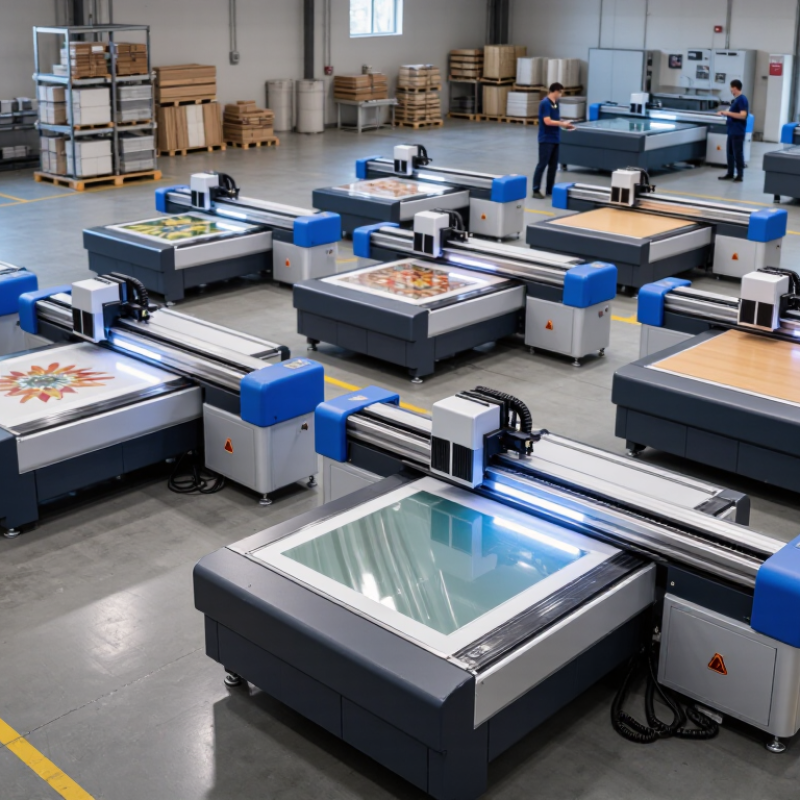
Top 10 UV Flatbed Printer Manufacturers in China?

Choosing the right UV Flatbed Printer manufacturer in China requires more than comparing prices and colorful product brochures. Print quality, machine stability, ink performance, service response, and long-term operating costs can vary sharply between suppliers. This guide explores ten notable Chinese manufacturers and examines the practical factors behind their market reputation.

The focus is real-world performance. A reliable printer should produce consistent color on acrylic, glass, wood, metal, and other suitable materials. Its printhead configuration, UV curing system, bed size, software compatibility, and maintenance design also deserve careful review. Factory experience matters, but it should not replace independent verification. Buyers should request sample prints, inspect production facilities, confirm warranty terms, and ask how quickly spare parts can arrive.

No list is perfect.

Manufacturers change models, pricing, and support policies over time. Some companies communicate technical strengths clearly, while others provide limited information. That limitation deserves attention. A high ranking does not guarantee the best fit for every workshop, packaging business, sign producer, or industrial application. Production volume, substrate requirements, available workspace, and operator skills all influence the final decision. The following overview aims to provide a balanced starting point, combining technical considerations with buyer-focused observations. It also encourages readers to compare evidence carefully before placing an order. A machine may look impressive during a demonstration, yet daily reliability is proven through repeated printing, scheduled maintenance, and responsive technical support.

Top 10 UV Flatbed Printer Manufacturers in China?

What Is a UV Flatbed Printer and How Does It Work?

A UV flatbed printer is a digital machine that prints directly onto rigid or flexible materials. Common substrates include acrylic, glass, wood, metal sheets, ceramic tiles, and coated boards. Unlike traditional printers, it does not require paper transfer. The material stays flat on a vacuum table while a printhead moves across its surface. It is not magic. The printer places microscopic ink droplets with controlled speed and spacing.

The process begins with artwork prepared in a color-managed software system. The printhead deposits CMYK ink, while white ink can create opacity on dark materials. Some machines also apply clear varnish for gloss, texture, or selective highlights. UV LED lamps cure each layer almost immediately after printing. This fast curing reduces drying time and helps preserve sharp edges. However, ink adhesion still depends on surface cleanliness, coating, and material energy. The surface matters.

In practical production, operators usually wipe the substrate, check its thickness, and test a small area before full printing. A fingerprint or uneven board can cause weak adhesion, banding, or blurred details. Small gaps matter. Flatbed printing is flexible, but it is not suitable for every object; heat-sensitive, dusty, or heavily textured surfaces may need preparation. Color may also change between materials, so a reliable workflow uses test charts, fixed profiles, and regular nozzle checks. My imperfect observation is simple: impressive samples can hide difficult maintenance, especially when white ink sits unused for too long.

What Is a UV Flatbed Printer and How Does It Work?

A UV flatbed printer deposits ultraviolet-curable ink directly onto rigid or flexible media. UV-LED lamps cure each ink layer immediately, enabling printing on materials such as acrylic, glass, wood, metal, PVC, foam board, and textiles.

The chart presents representative bed-size classes commonly used in the UV flatbed printer market. Actual dimensions vary by machine configuration; the values show the approximate printable bed area calculated from typical format sizes.

How China’s UV Flatbed Printer Industry Has Developed

China’s UV flatbed printer industry has changed from a small equipment segment into a mature manufacturing field. Early machines mainly served sign shops and local advertising workshops. They offered basic ultraviolet curing, limited color control, and modest bed sizes. Operators often adjusted ink flow by hand. Results could vary between morning and afternoon.

Demand for short-run customization accelerated development. Furniture panels, glass, acrylic sheets, metal plates, and packaging samples required direct printing without expensive screens. Manufacturers responded with stronger vacuum tables, adjustable printheads, faster curing systems, and software for precise image alignment. Some models now support white ink and varnish, allowing raised textures and layered effects. Production floors also became cleaner and more automated.

The top ten manufacturers should not be judged by speed alone. A reliable assessment needs field experience, ink stability, maintenance access, training, and after-sales response. Technicians usually inspect nozzle tests, color consistency, curing strength, and printhead protection before approving a machine. Daily cleaning still matters. Neglected maintenance can erase impressive specifications quickly.

The industry has also faced weak points. Early claims sometimes emphasized maximum speed rather than usable production speed. Some buyers learned this the hard way. Energy use, software compatibility, and spare-part availability deserve equal attention. China’s progress is clear, but quality is not identical across every factory. Careful testing remains necessary.

Criteria for Evaluating the Top Chinese Manufacturers

Top 10 UV Flatbed Printer Manufacturers in China

Criteria for Evaluating the Top Chinese Manufacturers

Evaluating Chinese UV flatbed printer manufacturers requires more than comparing catalog prices. Start with print consistency, especially across large panels and repeated production runs. Request test samples using your actual materials, such as acrylic, glass, aluminum, or wood. Inspect fine text, solid color areas, gradients, and white ink coverage under normal lighting.

A reliable manufacturer should explain nozzle maintenance, curing performance, and ink adhesion clearly. Ask for factory videos, machine serial records, and documented quality checks. Certifications can support credibility, but they should match the delivered machine. A polished showroom can mislead. Factory visits or independent inspections provide stronger evidence.

Service capability often separates a dependable supplier from a risky purchase. Check response times, remote diagnosis procedures, spare-part availability, and technician training. Confirm warranty limits in writing, including printheads, lamps, motors, and software. Ask whether operators receive practical training after installation. I have seen buyers focus on speed and overlook daily cleaning time. That mistake becomes expensive.

Review the machine’s frame accuracy, vacuum table strength, software compatibility, and power requirements. Calculate total ownership cost, not only the purchase price. Ink waste, maintenance labor, downtime, and replacement parts matter. A manufacturer willing to discuss weaknesses may deserve more trust than one promising perfect results. Evaluate evidence, not confident language.

Top 10 UV Flatbed Printer Manufacturers in China? - Criteria for Evaluating the Top Chinese Manufacturers

This is an evaluation framework, not a verified ranking of specific companies. The weights are suggested editorial values; assess each supplier using current, documented evidence and compare like-for-like printer configurations.

No. Evaluation criterion Suggested weight What to evaluate Evidence to request Scoring guidance
1 Print quality and repeatability 16% Fine-detail reproduction, color consistency, banding, registration, and repeatability across production runs and supported materials. Sample prints made on the buyer’s material; test-file results; documented print modes and resolutions. Score higher when samples meet agreed acceptance criteria across multiple runs, not only in a one-off demonstration.
2 Productivity and usable work area 12% Maximum printable dimensions, substrate thickness and weight limits, loading method, and production speed at a specified quality mode. Technical specification sheet; measured print-time demonstration using a defined file and print mode. Compare output at the same image coverage and quality setting; distinguish advertised maximum speed from production speed.
3 Ink system and material compatibility 12% Supported UV-curable ink configurations, including available color channels, white ink, and varnish where offered; adhesion on intended substrates. Ink technical data sheets and safety data sheets; substrate-specific adhesion and curing test results. Score higher when compatibility is demonstrated on the buyer’s actual materials and the ink supply and handling requirements are clearly documented.
4 Mechanical design and build quality 10% Frame and bed stability, gantry movement, vacuum hold-down or other substrate-fixing methods, alignment, and ease of routine maintenance. Machine inspection; component and maintenance documentation; demonstration of loading, alignment, and cleaning procedures. Assess stable operation, accessible service points, and suitability for the expected workload and environment.
5 Printhead and motion-system documentation 10% Printhead model and configuration, availability of replacement parts, motion components, and the procedure for maintaining or replacing key parts. Written bill of materials or configuration sheet; parts list; warranty terms and replacement-part lead-time information. Score higher when the actual machine configuration and service implications are disclosed in writing.
6 Software and workflow compatibility 9% Included RIP software, supported file formats, color-management workflow, job setup, and compatibility with the buyer’s operating environment. Software specification and license terms; workflow demonstration using buyer-provided artwork; training materials. Evaluate ease of setup, repeatable color workflow, licensing clarity, and availability of software support and updates.
7 Safety and regulatory documentation 9% Applicable electrical and machine-safety provisions, UV-light shielding, emergency stops, ventilation guidance, and documentation for the destination market. Declaration or certificates applicable to the exact model and destination; user manual; installation and safety instructions. Verify scope, model identity, issuing body where applicable, and whether the documentation matches the machine being purchased.
8 Quality management and production controls 8% Documented assembly checks, machine testing before shipment, traceability of configuration, and corrective-action processes. Quality-control checklist; factory test record; valid quality-management certificate and its scope, if claimed. Give credit for verifiable, documented controls rather than unsupported quality claims.
9 Warranty, service, and spare-parts support 8% Warranty coverage and exclusions, remote troubleshooting, technician training, spare-parts availability, and response arrangements. Written warranty; service-level details; recommended spare-parts list; support contact and escalation process. Compare the written coverage and practical support arrangements, including service across the buyer’s location and time zone.
10 Total cost of ownership and delivery 6% Machine and installation costs, consumables, expected maintenance, packaging, shipping terms, commissioning, and operator training. Itemized quotation; delivery and installation scope; consumables pricing; maintenance schedule and estimated operating requirements. Compare complete costs and responsibilities over the intended ownership period, not purchase price alone.
Total suggested weighting 100% For an optional weighted score, rate each criterion from 1 to 5 using documented evidence, then apply the listed weight. Treat missing or unverifiable information as a follow-up item rather than an established capability.

Top 10 UV Flatbed Printer Manufacturers in China

Top 10 UV Flatbed Printer Manufacturers in China

China’s top ten UV flatbed printer manufacturers compete through print quality, machine stability, and after-sales support. A reliable shortlist should examine production records, ink compatibility, curing performance, and service coverage. Factory evidence matters more than attractive brochures.

The strongest manufacturers usually offer rigid platforms, adjustable vacuum tables, and precise media alignment. These details affect acrylic sheets, glass panels, wood boards, and metal signs. A well-designed printer should maintain consistent color across long production runs. It should also provide clear maintenance instructions and replaceable printhead options.

Look closely.

Manufacturers with in-house testing can identify banding, ink adhesion, and curing problems earlier. Technical teams should explain calibration procedures in practical terms. Response time also matters when a machine stops during a busy order. Some suppliers advertise impressive speed, yet real output may fall after quality settings increase. That gap deserves careful questioning.

A dependable evaluation includes sample prints, operating videos, spare-parts availability, and written warranty terms. Energy use and workshop ventilation should receive attention too. The cheapest quotation may create higher costs through cleaning, downtime, or training. No ranking stays permanent. New factories improve quickly, while established suppliers may overlook software updates. Buyers should compare current evidence, not reputation alone. Personally, I would request a test using the exact materials and artwork planned for production. That step often reveals weaknesses hidden by polished demonstrations.

How to Choose the Right Chinese UV Flatbed Printer Manufacturer

Choosing a Chinese UV flatbed printer manufacturer starts with the work you actually produce. Measure your largest rigid sheets, note typical materials, and ask for a live test using your own files. A glossy acrylic sample may look impressive, but inspect small text, white ink coverage, edge sharpness, and adhesion after curing. Ask for repeat tests, not one polished sample. Small differences matter.

Check technical claims against documented specifications. Request printhead configuration, usable bed size, curing system details, recommended operating conditions, and maintenance intervals.

According to Grand View Research, the global digital printing market was valued at USD 35.5 billion in 2023, with projected growth through 2030. This broad market figure is not a UV-flatbed forecast, but it signals why comparing capacity and service plans matters.

Ask how spare parts are stocked, what remote support includes, and how quickly technicians typically respond. Get warranty exclusions and training scope in writing. Then speak with two or three current users producing similar work. It takes time. I would still do it. A factory visit can reveal practical details, though it cannot guarantee trouble-free operation. Compare the tested output, total ownership costs, and support evidence before choosing a supplier.

Get Free Instant Quote

    Questions? We can help.
    Contact a Packaging Specialist for product & pricing information.